Project Snapshot
- Client – Exeter City Council
- The Challenge – To deliver the UK’s first Passivhaus‑certified leisure centre, a highly complex, energy‑intensive building incorporating swimming pools, fitness and spa facilities, while achieving exceptional airtightness and reliable, long‑term performance.
- What WARM did – WARM provided Passivhaus consultancy and airtightness support throughout construction, working closely with the contractor and supply chain to embed Passivhaus principles on site. This included training, quality control and testing strategies to manage risk on a first‑of‑type project.
- Why it matters – St Sidwell’s Point proved that Passivhaus is achievable for one of the most demanding building types. The project set a new benchmark for low‑energy leisure buildings in the UK.
Project Overview
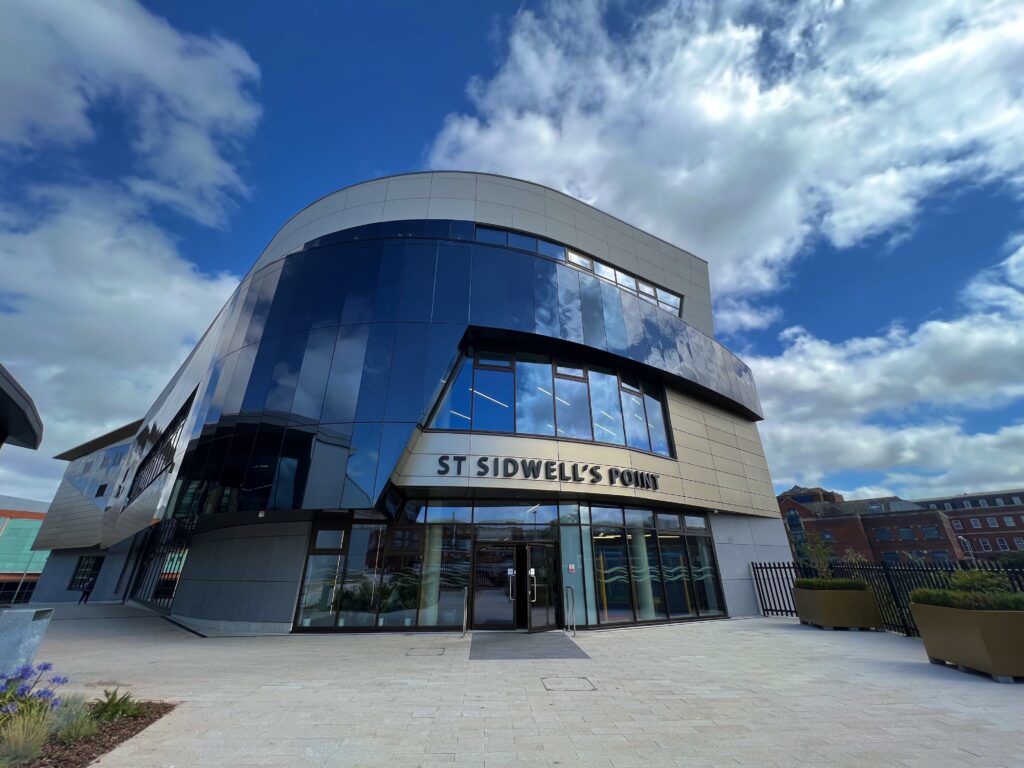
St Sidwell’s Point is a Passivhaus leisure centre in Exeter city centre, comprising multiple swimming pools, fitness spaces, studios and supporting facilities. Leisure centres are among the most energy‑intensive public buildings, operating year‑round at high temperatures and humidity levels.
The project demonstrates how Passivhaus can be applied at scale to deliver substantial energy demand reduction, even in complex, multi‑zoned environments.
Our Role
St Sidwell’s is the first Passivhaus leisure centre in the UK, the airtightness requirement was exceptional for this building as it had such a complex form and range of constructions. We provided Airtightness Consultancy to the Contractor and training alongside our sister company Coaction.
With our help the Contractor upskilled its workforce (we love to disperse our knowledge rather than holding onto it!). With Kier we developed the Passivhaus Passport to set a new benchmark for quality. This programme introduced key Passivhaus principles, essential quality controls, and trade‑specific best practice, with over 2,500 operatives completing the training and gaining skills and confidence to build to the Passivhaus Standard. The shared knowledge and consistent workforce on site led to exceptional results, including an airtightness score of 0.3 m³/hr/m² @ 50Pa. The approach also strengthened quality, pride, and collaboration across the project team.
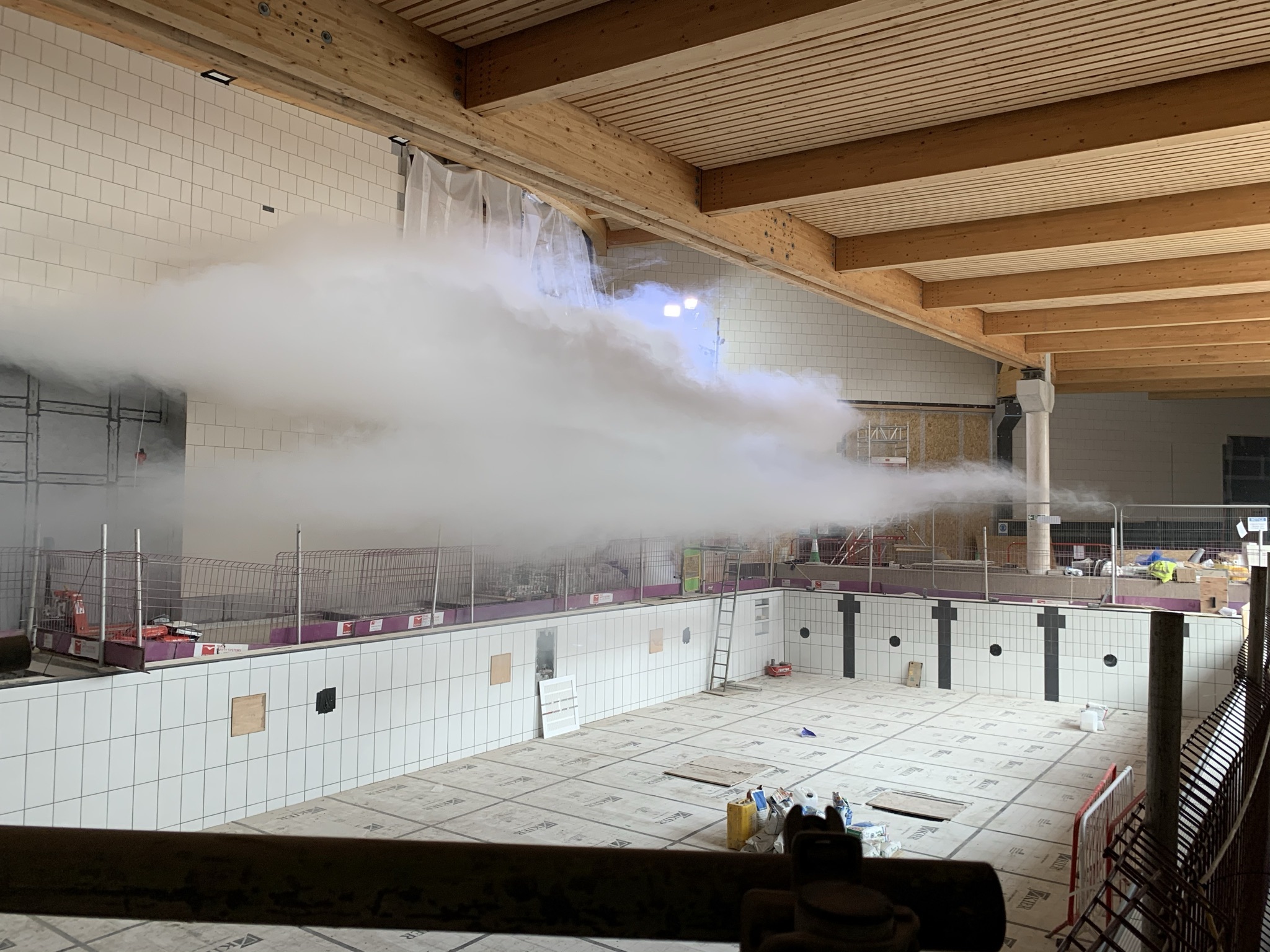
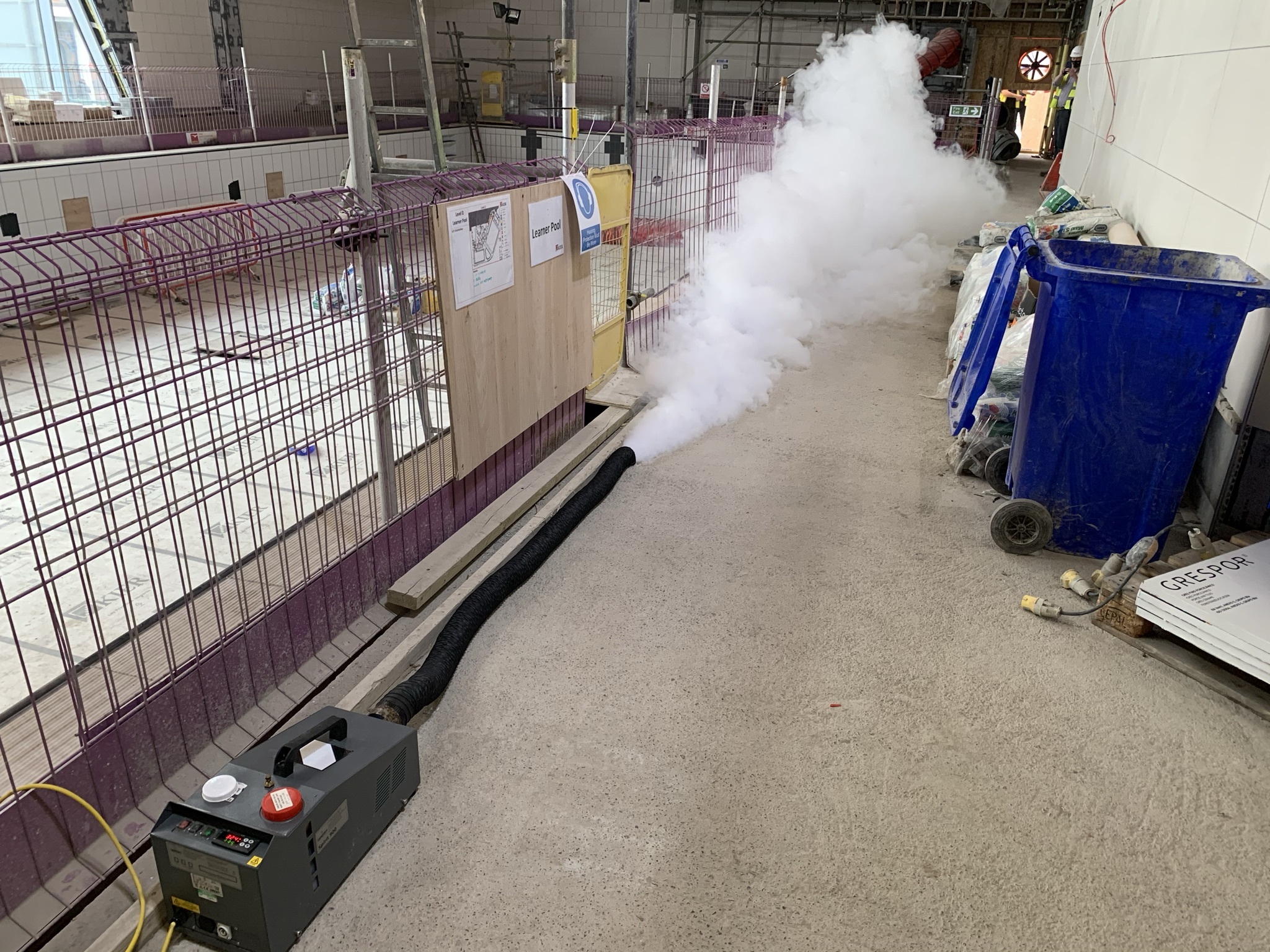
During the project we assisted in developing strategies for intermediate testing, mock-ups and quality sign off as well as undertaking tests.
St Sidwell’s Point showcases what’s possible when clients, designers, contractors and the supply chain are united by a common goal and the right training.
The Challenge
Achieving Passivhaus performance on a leisure centre introduced exceptional technical and delivery challenges, particularly around airtightness, given the building’s size, complex geometry and wide range of construction interfaces.
Meeting the Passivhaus airtightness target for this building type required a level of workmanship, coordination and on‑site understanding that exceeded typical construction practice.
The Warm Difference
Building Passivhaus capability on site
WARM provided airtightness consultancy and training to the contractor, supporting the workforce in understanding Passivhaus principles and how they translate into site practice. Alongside our sister company, Coaction, this approach helped upskill operatives and embed quality across the project team.
Raising the bar for quality control
Working collaboratively with Kier, WARM helped develop the Passivhaus Passport – a structured quality and training programme setting out Passivhaus requirements, key details and trade‑specific best practice. Over 2,500 operatives completed the training, contributing to consistent delivery on site.
Delivering exceptional airtightness
Through a combination of early engagement, mock‑ups, intermediate testing and quality sign‑off, the project achieved an airtightness result of 0.3 m³/hr/m² @ 50 Pa, exceeding the Passivhaus requirement for this highly complex building type.
Why this Project Matters
For the Exeter, St Sidwell’s Point demonstrates that energy‑intensive public buildings can be delivered to Passivhaus standards, supporting the Council’s long‑term carbon and energy objectives.
For WARM the project reinforced our experience in large, complex and non‑domestic Passivhaus projects, showing the value of combining technical rigour with hands‑on site engagement and training.
St Sidwell’s Point showcases what’s possible when clients, designers, contractors and the supply chain are united by a common goal and the right training.
Project Information
- Passivhaus Classic
- LEISURE 4 Pools, Fitness Studios, Cafe and supporting spaces
- Airtightness Passivhaus Requirement: q50 ≤ 0.4 m3 /h per m2 envelope area (8m3/hr/m2 for building regulations) – Recorded: q50 ≤ 0.3 m2 /h per m2 envelope area