Maybury Primary School
Education
Maybury Primary School
A combined primary school, nursery and GP surgery for Edinburgh City Council.


The Team
- Client - City of Edinburgh Council
- Architect and Passivhaus Designer - Architype
- Contractor - Morrison Construction
- M&E engineer - Rybka
- M&E engineer - E3CE
Project Snapshot
- Client – City of Edinburgh Council -The council has made a long-term commitment to delivering new Council buildings to Passivhaus standards and Net Zero carbon by 2030
- The Challenge – Deliver the Council’s first certified Passivhaus school: a complex, mixed‑use building combining a primary school, nursery and GP surgery, all while achieving very low energy use, long‑term affordability, and comfort for nearly 1,000 daily users.
- What WARM did – As Passivhaus Certifiers, WARM worked alongside the design and construction team to protect performance from concept through to commissioning, improving system efficiency, and shaping controls that work for occupants.
- Why it matters – Maybury set a benchmark. It demonstrates to the Council that Passivhaus can work for complex public buildings — giving the Council confidence in Passivhaus and net zero carbon standards.
Project Overview
Maybury Primary School is a mixed‑use Passivhaus Classic building, accommodating a primary school, nursery and GP practice under one roof. The project supports a highly diverse occupancy profile, with nearly a thousand daily users including pupils, nursery children, patients and staff, each with differing comfort, ventilation and operational requirements.
WARM worked closely with the client, design team and contractor to ensure that energy efficiency, usability and long‑term performance were all achieved in practice, not just in the model.
The Challenge
The Council set an ambition to achieve energy use below the Scottish Futures Trust target of 67 kWh/m²/year, while delivering a building that would remain flexible, comfortable and affordable to operate over its lifetime.
However, it wasn’t just about hitting performance targets. WARM places equal importance on ensuring systems are simple and intuitive for day-to-day users - recognising that long‑term performance depends as much on usability as on design intent.
The WARM difference
Improving system performance through site‑led solutions
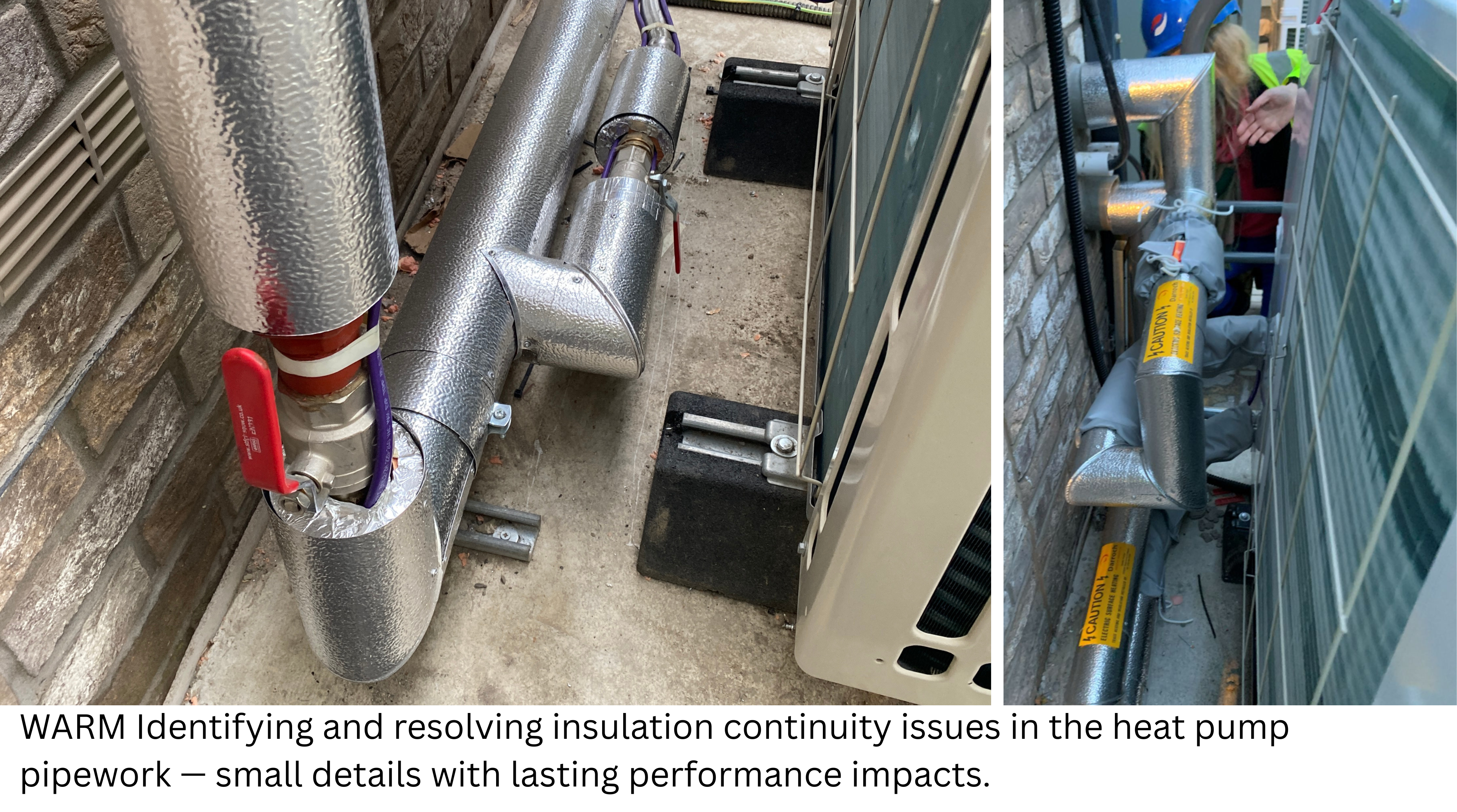
WARM supported the site team in developing a more robust solution to insulating the primary pipework at the rear of the air source heat pumps. By reviewing the installation on site and advising on improved insulation continuity, WARM helped deliver measurable performance gains, supporting both energy efficiency and system longevity.
Reducing operational energy through smarter control
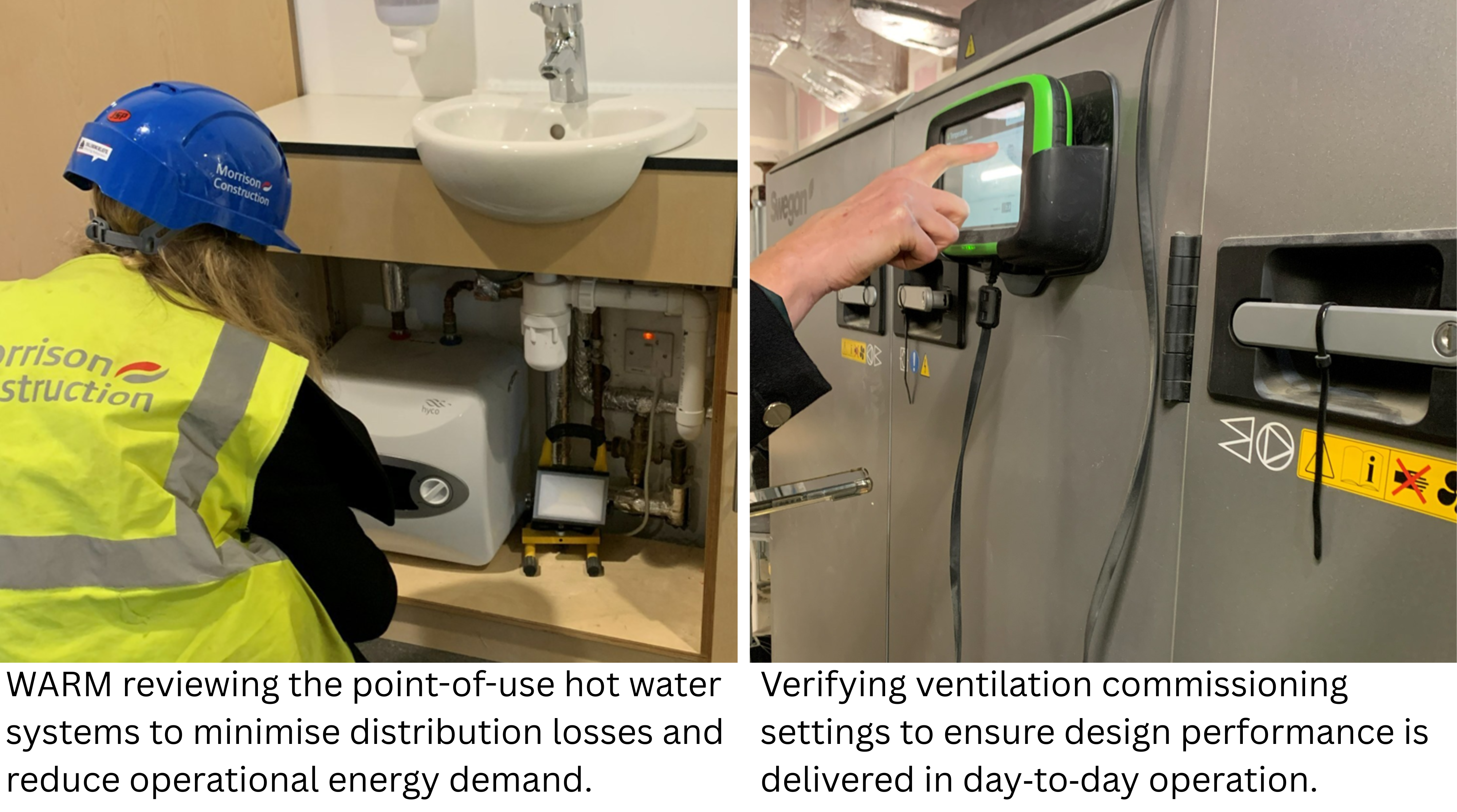
Recognising the varied operational needs within the building, WARM pushed for the inclusion of a local ventilation rate control switch for kitchen staff. This allows ventilation rates to be reduced during cold food preparation tasks, when high extract rates are unnecessary.
This is a small change with big effect. It significantly reduces electricity use without compromising indoor air quality.
Collaborative delivery
WARM worked closely with, the client/project manager, the Passivhaus Designer and the contractor ensuring the performance was actively managed through construction and commissioning. On-site challenges were addressed early meaning opportunities to improve performance were captured quickly.
Why This Project Matters
For the City of Edinburgh Council, this project shows that Passivhaus can be delivered reliably for complex, high‑occupancy public buildings.
For WARM it represents an ongoing partnership supporting the Council’s ambition to deliver Net Zero buildings by 2030 and beyond. The project reinforces the value of hands on involvement in certification, working on site, engaging with users and focusing on how buildings perform once they are in use.
Project information
- Passivhaus Classic
- 630 school pupils, 128 nursery children, 35 GP patients and 110 school, nursery and GP staff. Total 903 occupants.
- Airtightnes 0.23 1/h @50Pa
- Treated floor area: 4,880 m2
- WARM project lead: Liam McDonagh-Greaves